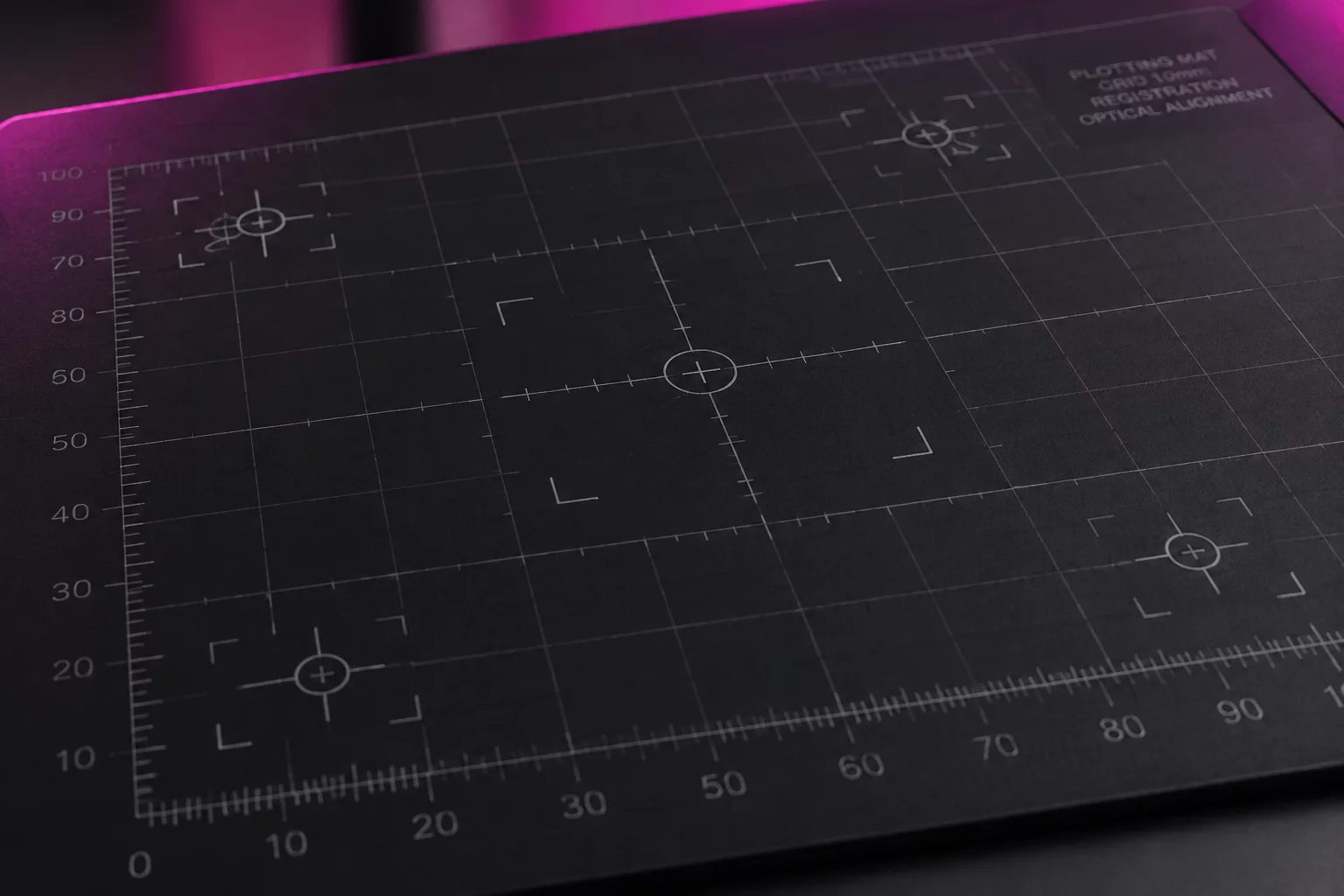
Documenting the Physical Gap Between Print and Cut
An analytical archive dissecting sheet margins, sensor recognition corridors, blade drag physics, and repeatable boundary alignments.
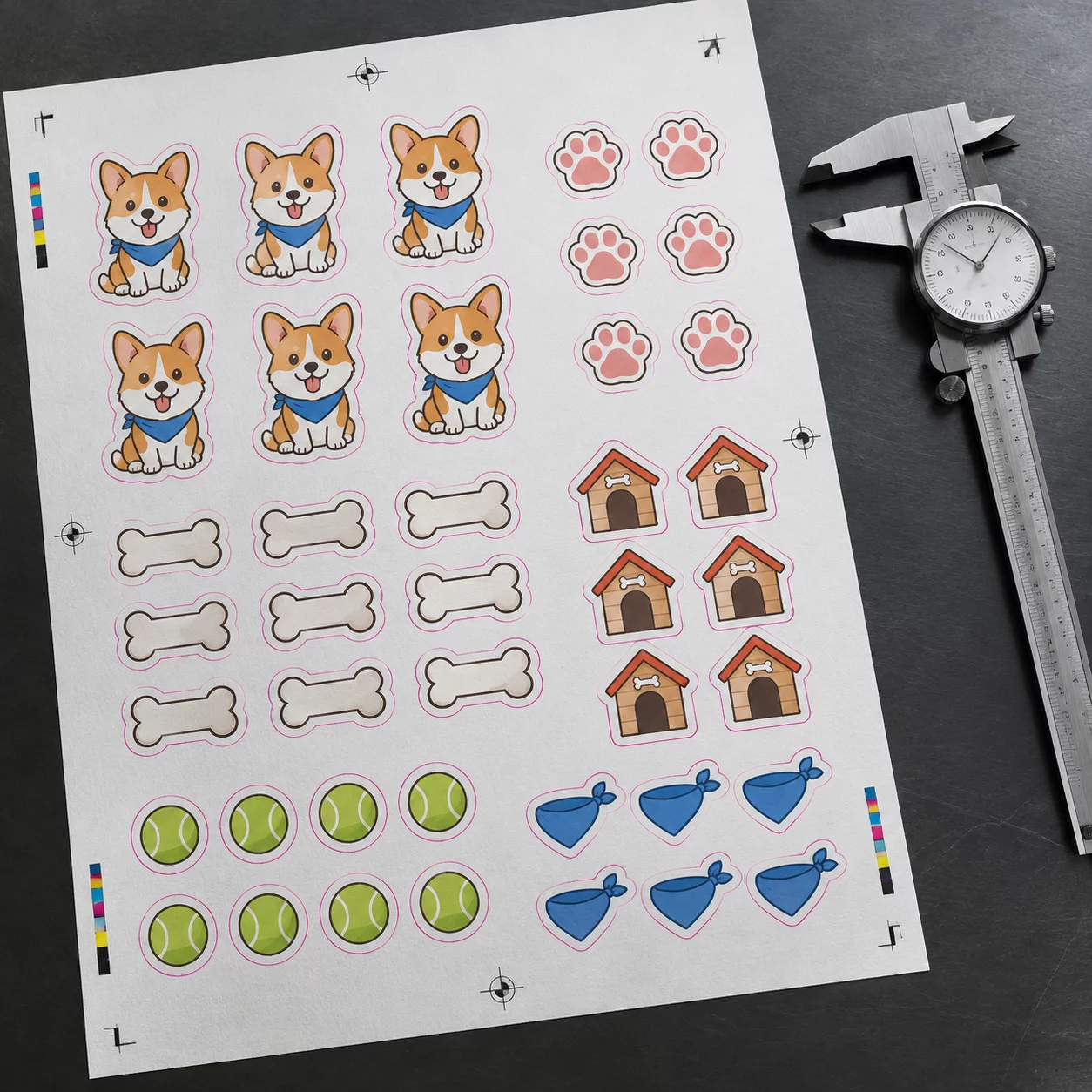
The Perimeter Between Ink and the Blade
RegistrationMargin Notes exists as an independent analytical fieldbook and visual case library dedicated to the intermediate territory of print-and-cut production. While traditional design references concentrate strictly on vector aesthetics or surface finishes, this project documents the physical interface connecting printed artwork, sensor margins, cutter registration tracks, and the final mechanical contour.
At its core, every record in this fieldbook addresses a singular operational inquiry: What needs to remain visible, printable, and cuttable around this design? We examine how optical sensors read contrast on reflective media, why tangential drag blades distort delicate outer radii, and how bleed paths prevent white optical fringing along high-contrast borders.
Project Boundaries & Neutral Scope
This archive functions purely as an observational technical reference. RegistrationMargin Notes is neither a commercial sticker merchant nor an official software support channel for any single cutting plotter brand. All diagrams, parameter assessments, and layout schematics reflect empirical workshop testing designed to document physical production tolerances.
The Print/Cut Review Sheet Framework
Every entry archived within RegistrationMargin Notes is cataloged through a uniform analytical unit: the Print/Cut Review Sheet. This standardized documentation protocol dissects composite design files into discrete mechanical vectors, isolating the potential failure points between ink deposition and blade movement.
Layer Isolation
Segregation of visible print layers, registration boundaries, kiss-cut paths, and through-cut lines into strictly audited color-coded vector separations before dispatch.
Bounding Box Audits
Quantification of the true mechanical boundary volume, ensuring micro bleed allowances and registration optical sensors maintain designated keep-out distances.
Blade Drag Allowances
Mechanical compensation metrics for blade offset, caster lag, overcut loops, and directional knife drag across varying media densities and carrier sheets.
Sensor Reading Zones
Inspection of optical mark reflectance, specular glare mitigation on laminated substrates, and paper registration track cleanliness under optical scanning.
Repeatable Precision Over Trial and Error
By evaluating artwork files through these four technical filters, printmakers eliminate material waste, identify tracking drift before executing multi-sheet batches, and establish a permanent record of reliable machine configurations.